

Ceiling Water Damage in Kingsport: Signs, Causes, and Fixes
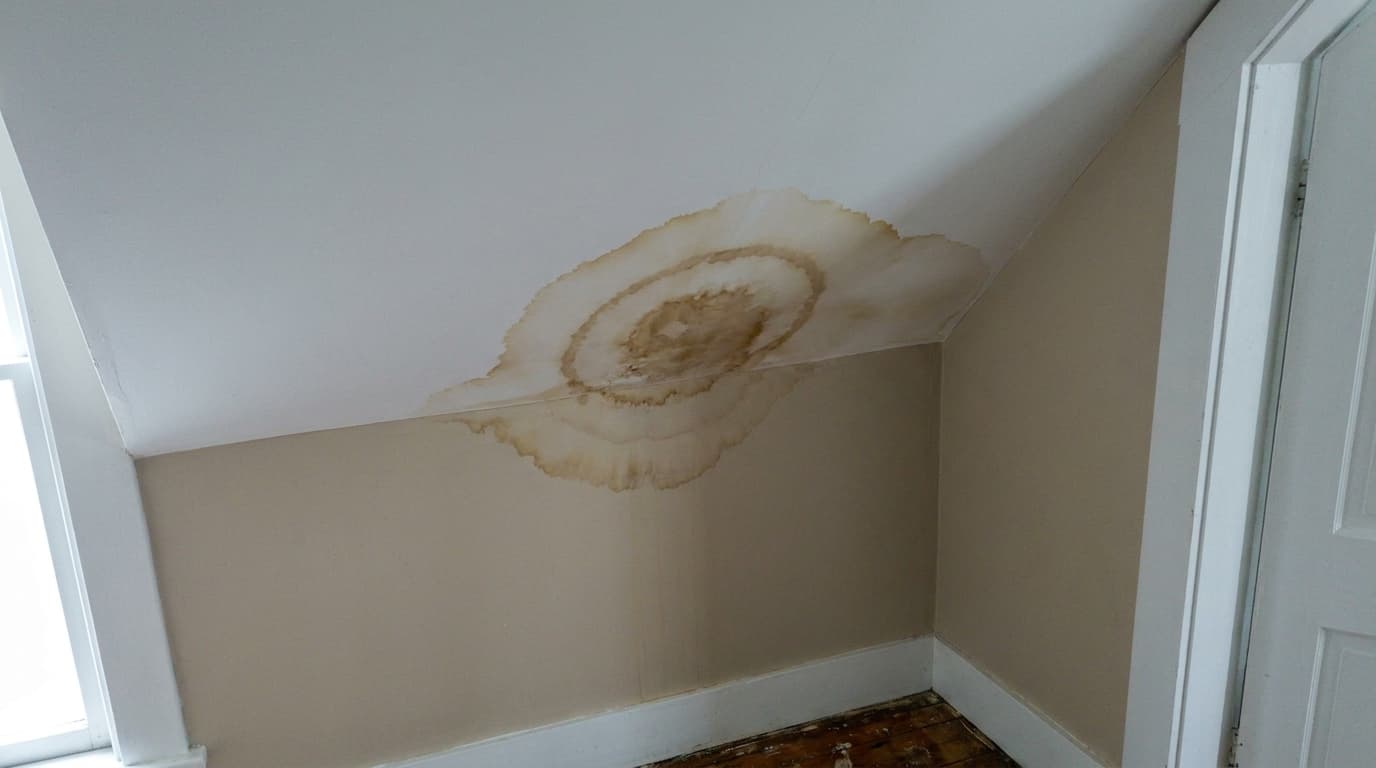
A brown ring on a ceiling looks about the same on the day it appears and a year later. That is the whole difficulty. The mark proves water was there. It does not tell you whether water is there now, and most of what you will find online skips that question and goes straight to the primer.
So this is the order we read a stained ceiling in: what the mark is, where the water came from, whether it is still running, and the point at which it stops being cosmetic. That last point is where water damage restoration begins, and plenty of ceiling stains never reach it. We will say so where it applies.
Get Your Quote
Ready to handle this with a pro?
You're reading about What Do Water Stains on a Kingsport Ceiling Mean. Get a fast quote for water damage restoration service in Johnson City, TN from Conrad's Water Damage and Fire Restoration.
What Do Water Stains on a Kingsport Ceiling Mean?
A water stain is not the water. It is what the water left behind.
Water that soaks through roofing felt, framing, insulation and drywall carries dissolved minerals and tannins with it. When it evaporates, those solids stay in the paper face of the drywall, and the gypsum and paint underneath discolor for good. The brown is a deposit, not a puddle. That is why it survives long after the leak has stopped, and why a stain on its own is evidence of history rather than an emergency.
Which makes "is a water stain on a ceiling serious" an awkward question. The stain is not the problem. What put it there might be — or might have been over and done with before you noticed the mark.
Four things cause most ceiling stains.
The roof. Failed or lifted flashing, a split pipe boot, cracked or missing shingles, an old nail hole, a skylight that was never sealed properly. Water gets in at the penetration, not at the stain.
Plumbing above. A supply line, a drain, a failed wax ring under an upstairs toilet, a cracked shower pan, missing caulk at a tub. In a two-story house, the bathroom over the stain is the first place to look.
Condensation and humidity. Warm wet air meeting a cold surface inside the ceiling cavity: uninsulated ductwork, a bathroom fan venting into the attic instead of outside, roof decking dropping below the dew point on a cool night after a humid day. East Tennessee summers make this a real cause here, not a footnote.
HVAC. A clogged condensate line, an overflowing drip pan, a leaking duct joint, condensation on an uninsulated supply line in July.
The last two overlap, and both bite harder in older Kingsport housing stock, where attic insulation and ventilation were built for different expectations than the air conditioning now running underneath them.
How Do You Find the Leak Behind a Kingsport Ceiling Stain?
Start with the rule that undoes most guessing: the stain is not necessarily under the leak. Water runs along the top of the drywall, down a joist, along a duct, and drops wherever it finds a seam. It can enter the roof on one side of a room and surface on the ceiling near the other.
Here is how badly this goes when people diagnose from a photograph. Someone posted a picture of a stained ceiling on Home Improvement Stack Exchange, asking whether it was the roof or attic condensation. Six people weighed in. Between them they proposed condensation on the ceiling surface, a splash from below, moisture wicking out of the attic, a plumbing or air conditioning leak overhead, mildew in a humid room, and rodent urine. Another contributor shot the plumbing answer down in a line: "That would usually result in a single, large stain."
Nobody agreed. One answer ended with the only line that settles anything: "The only way to be sure it's not coming from above, is to get up in the attic and have a look around."
That is the real sequence, and most of it is free.
Get into the attic if the stain is on a top-floor ceiling. Look straight up above it, at the rafters and the underside of the decking, for staining or a track mark. A long-standing answer on another Stack Exchange thread recommends lifting the insulation over the stain to check whether it is wet — which both finds the source and lets the drywall dry. If the attic means a ladder you are not steady on, stop there.
Watch what the weather does. A stain that appears or darkens during and after rain points at the roof. One that is worst in humid weather and indifferent to rain points at condensation.
Read the position. Under a bathroom, kitchen or laundry, look at plumbing. Near a chimney, vent stack, skylight or roof valley, look at the roof. Running in a straight line, look at the ductwork above it.
Check the water meter, and listen. For a home with the meter out at the street, Bob Vila publishes the cleanest version of the first test: shut off the main water supply inside the house and watch the meter. If it keeps moving, the leak is in the buried line between the street and the house, not in the plumbing above your ceiling. Dripping you can hear when it is not raining is a pipe, not the roof.
Two things not to do: cut into the ceiling before you know what is growing above it, and scrub the stain while you are still investigating. Its shape is data.
Most of what prevents a repeat is dull and cheap: clear gutters and downspouts, a clean HVAC condensate line and drip pan, a bathroom fan that terminates outside rather than in the attic, and a look at your ceilings a couple of times a year rather than never.
Is the Stain on Your Kingsport Ceiling Old or Still Active?
This is the question the internet keeps skipping, and it decides everything that follows. A stain from a leak repaired years ago needs primer. A stain fed by water still arriving needs a good deal more than primer, and painting it only buys you the time until it comes back.
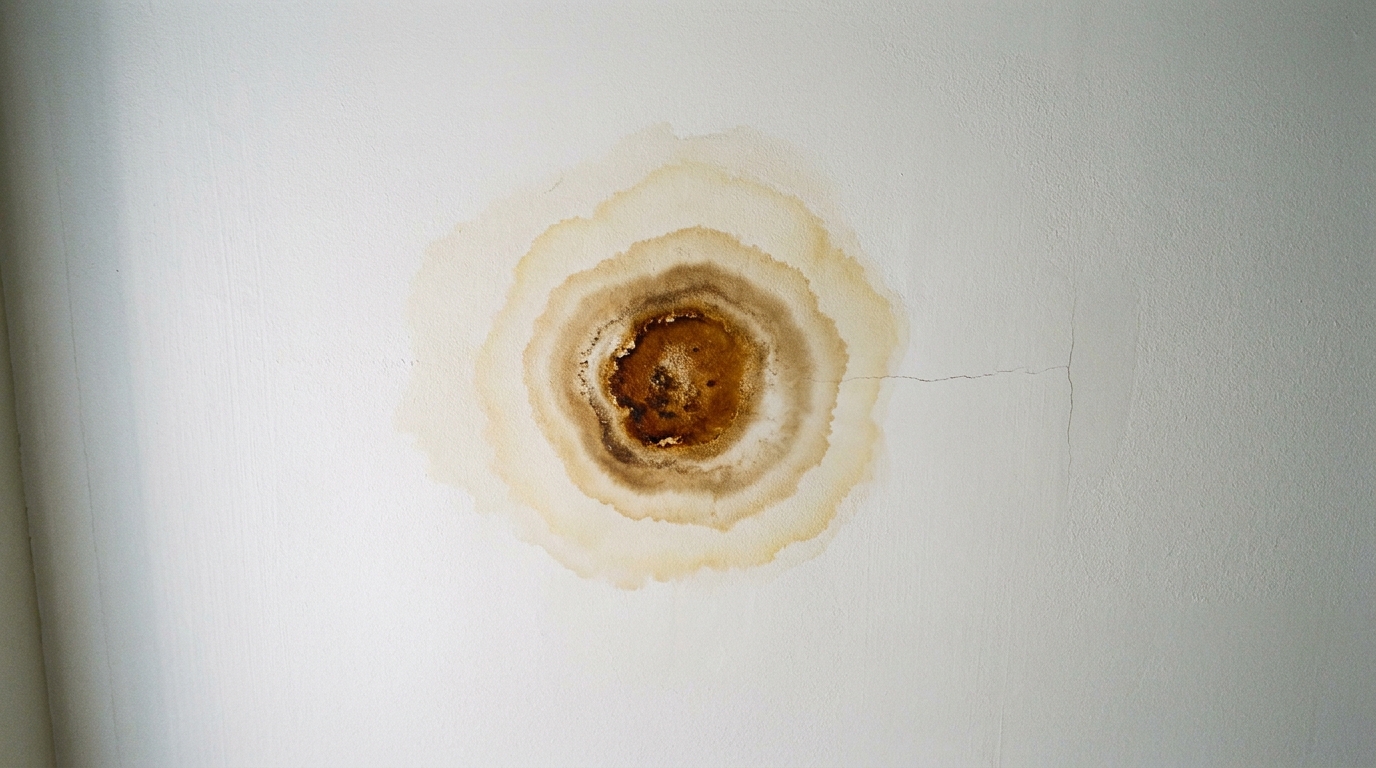
Four checks you can run yourself, in the order they are worth running.
Touch it. A stain that feels cool compared with the ceiling around it suggests moisture still in the material, because evaporation pulls heat out of the surface.
Read the edge. A dried stain has a hard, settled border. Active moisture keeps pushing outward, so the edge feathers and looks like it is still moving.
Photograph it and wait for rain. Take a picture with something in frame for scale, then take another after the next real storm. Grown or darkened means water is still coming in.
Look for rings. Concentric tide lines like the ones in the photo above are the record of a surface that got wet, dried, and got wet again. Several of them mean this has happened more than once, whatever the ceiling looks like today.
People work this out for themselves. One poster, describing a ceiling marked when an upstairs toilet backed up twice, explained their own photograph without being asked: it happened twice, "hence the multiple rings." A commenter elsewhere put the whole test in a line — completely dry means old and resolved, and anything less than bone dry means an active leak.
Now the honest limits of all four: they are indications, not findings. A stain can spread with no new water at all, because moisture already inside the ceiling keeps wicking outward as it dries — and an old stain can bleed up through fresh paint months later, which reads exactly like a new leak to whoever is holding the roller. On a third Stack Exchange thread, the asker could not tell residual drying from a live leak. One answer put a number on it: two months on, new stains would be a long time coming — but old stains can still bleed through fresh paint. You cannot answer it by looking.
A moisture meter can. So can a thermal camera, which does not see water but sees the cool patch evaporating water leaves behind, and will usually show the wet area running past the stain. That is the part people are least prepared for: the mark on the ceiling is the portion of the problem that happens to be visible.
Get Your Quote
Ready to handle this with a pro?
You're reading about When Does a Ceiling Stain in Kingsport Mean Hidden Mold. Get a fast quote for water damage restoration service in Johnson City, TN from Conrad's Water Damage and Fire Restoration.
When Does a Ceiling Stain in Kingsport Mean Hidden Mold?
Not always, and the alarm around this is overdone. But there is a threshold, and EPA states it in one line: "It is important to dry water-damaged areas and items within 24-48 hours to prevent mold growth." The principle above it is simpler still — "The key to mold control is moisture control."
So the mold question is the active-or-old question in a different hat. A soaking that dried quickly is unlikely to have grown anything. Water arriving quietly for weeks, into insulation holding it against the back of the drywall, is another matter.
EPA lists where hidden mold actually sits, and two of its examples are exactly this situation: "the back side of dry wall" and "in roof materials above ceiling tiles (due to roof leaks or insufficient insulation)." It also names the tell that costs nothing to check — you may suspect hidden mold "if a building smells moldy, but you cannot see the source."
Worth taking seriously alongside a ceiling stain: a musty smell in that room that will not clear with the window open, paint bubbling or peeling near the mark, drywall gone soft, and dark growth at the edge of the stain rather than in its center. Whether that growth is mold, mildew or something else is a separate question, and color will not settle it.
On health we quote and do not extrapolate. EPA's position is that molds produce allergens and irritants, that inhaling or touching mold or spores may cause allergic reactions in sensitive people, and that mold exposure can irritate the eyes, skin, nose, throat, and lungs of both mold-allergic and non-allergic people. Molds can also trigger asthma attacks in people with asthma who are allergic to mold. Anything more specific belongs to a doctor.
One practical warning. EPA cautions that investigating suspected hidden mold means disturbing the place it may be growing — its example is pulling wallpaper and releasing a cloud of spores. Opening a ceiling is that same move at a larger scale, and doing it with containment is where mold remediation stops being a cleaning job.
Can You Just Paint Over a Water Stain on a Kingsport Ceiling?
Yes — under two conditions, and neither is negotiable. The source has to be fixed, and the ceiling has to be genuinely dry. Meet both and painting over the stain is the correct repair, not a shortcut. Miss either and you have only hidden the problem from yourself.
Why ordinary paint fails here explains the whole sequence. Bob Vila's write-up puts it well: interior latex paints are water-soluble, so "when a water stain comes into contact with latex paint, the stain dissolves into the wet paint layer as the paint dries, causing the discolored mineral contents of the stain to show through the paint to the ceiling surface once again." The stain is not covered. It is redissolved and carried up into your new coat.
Hence the order everyone in the trade uses: fix the source and confirm it, let the ceiling dry and check rather than assume, scrape any blistered paint back to sound material, wash the area down and let it dry again, prime with an oil- or shellac-based stain-blocking primer — sealing the deposit so it cannot travel is the whole point of that layer — then repaint, feathered out far enough that the patch does not read as a patch.
One hard exception, straight from EPA: "Do not paint or caulk moldy surfaces. Clean up the mold and dry the surfaces before painting. Paint applied over moldy surfaces is likely to peel." Priming over growth does not seal it in. It fails, and it fails messily.
There is also a look-alike worth ruling out first. Ghosting is a soot and dust deposit rather than a water mark, forming where framing members leave the ceiling slightly colder than the spaces between them. It reads gray to black rather than yellow-brown, runs in stripes following the joists instead of pooling, is dry to the touch, and stays the same through every weather change. Candles, a fireplace, cooking and cigarette smoke feed it. Primer covers ghosting, but if the conditions behind it are unchanged, so is the outcome.
When Should a Kingsport Ceiling Leak Get a Professional Look?
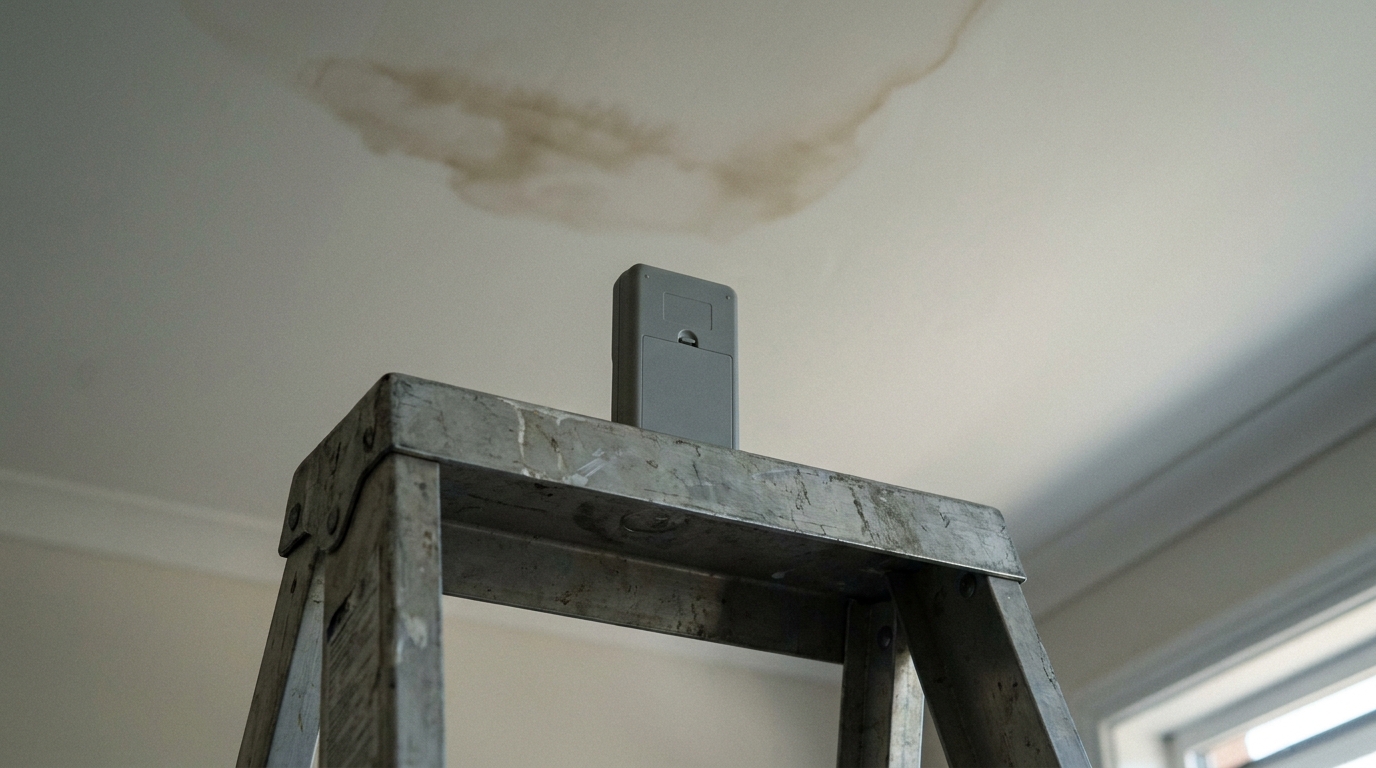
Part of this list is about damage. Part of it is about safety, and the safety items are not judgment calls.
The ceiling is sagging, bulging or soft. Wet drywall holds a surprising weight of water and lets go without warning. Keep people and pets out of the room.
Water is anywhere near a light fixture, ceiling fan or recessed can. Kill the breaker to that circuit before anything else, and do not stand under it with a bucket.
It is actively dripping. Containment first, diagnosis second.
The stain came back after you primed and painted. That is not a paint failure. That is the source still being there.
The stain keeps growing, a second one appears in another room, or there is a musty smell you cannot air out.
You have looked and cannot find the source.
What an inspection buys is a map rather than an opinion. We meter the ceiling and the rooms beside it, put a thermal camera on the assembly, and mark where the moisture actually stops — often well past where the brown stops. Then the real question can be answered: what has to come out, and what can be dried in place. Wet insulation holds water long after the drywall face feels dry to a hand, and structural drying is about the cavity, not the surface.
One boundary, because it saves a phone call. We do not fix roofs and we do not repair plumbing. Call a roofer or a plumber to stop the water; call us for what the water did to the building. Two trades, and both have to happen in that order.
Kingsport sits inside our emergency services 60 minute response time, a person answers day or night, holidays included, and we will tell you on the walkthrough if what you have is a primer job. Sometimes it is, and that is a fine answer.
The version where nothing happens starts with indoor humidity kept where EPA recommends it — below 60 percent, ideally between 30 and 50 percent. In an East Tennessee August that means an air conditioner doing its job, or a dehumidifier helping.
Get Your Quote
Ready to handle this with a pro?
You're reading about Quick Recap. Get a fast quote for water damage restoration service in Johnson City, TN from Conrad's Water Damage and Fire Restoration.
Quick Recap
The stain is a mineral deposit, not water. It proves water was there, not that water is there now.
The stain is not necessarily under the leak. Water travels along framing and ducts before it drops.
Old or active is the question that decides everything. Cool to the touch, a feathered edge, or spreading after rain all point to active — and a meter settles what looking cannot.
EPA's drying window is 24 to 48 hours. Soaked and dried fast is usually fine. Weeks of quiet wetting is not.
Painting over is legitimate once the source is fixed and the ceiling is dry: source, dry, scrape, wash, stain-blocking primer, ceiling paint.
Never prime over growth. EPA says paint over a moldy surface is likely to peel.
Gray stripes following the joists are probably ghosting, a soot deposit, and not a leak at all.
Sagging, dripping, water near a light fixture, or a stain back after painting are among the signs that stop being a homeowner job.
A roofer or plumber stops the water. We handle what it did to the house.
Conrad's Restoration Team
Water, Fire & Mold Restoration Crew
The restoration crews at Conrad's Water Damage and Fire Restoration handle water, fire and mold damage across Johnson City, the Tri-Cities and the Knoxville corridor. Someone answers the phone day or night, holidays included.
Related Posts
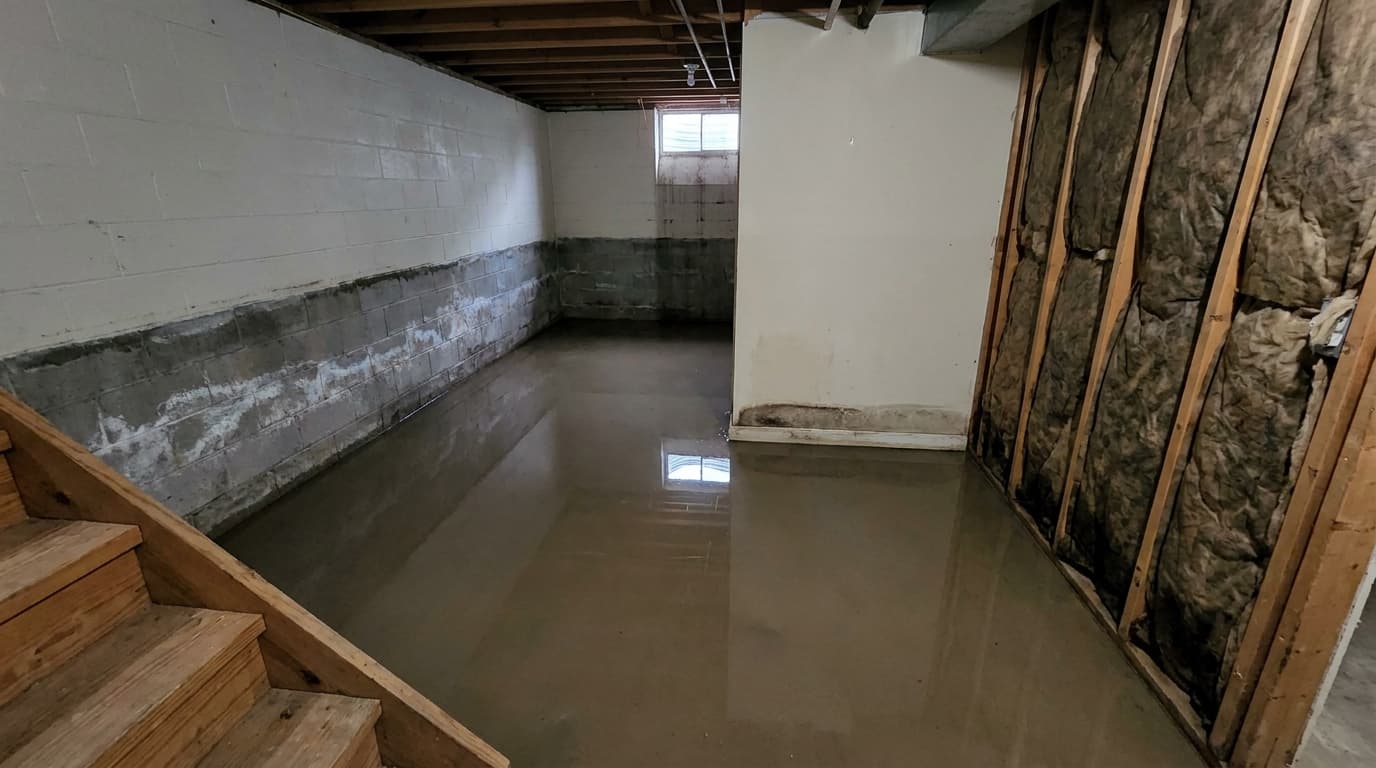
Flooded Basement in Johnson City, TN? What to Do First
Water in your Johnson City basement? Power and gas come first, then stopping the source, then the sump pump check almost nobody writes about.
What to Do When Pipes Freeze in Your Bristol, TN Home
A trickle instead of a stream on a cold Bristol morning usually means a frozen pipe. Here is how to tell, how to thaw it safely, what to do the moment one bursts, and why a burst pipe often stays silent until it thaws.
Does Homeowners Insurance Cover Water Damage in Knoxville?
Most water claims are decided by one question: how the water got out, and how long it had been getting out. Here is what a Knoxville homeowners policy generally covers, what it almost never touches, and what to document before the adjuster arrives.