Mold vs Mildew in Kingsport Homes: How to Tell the Difference
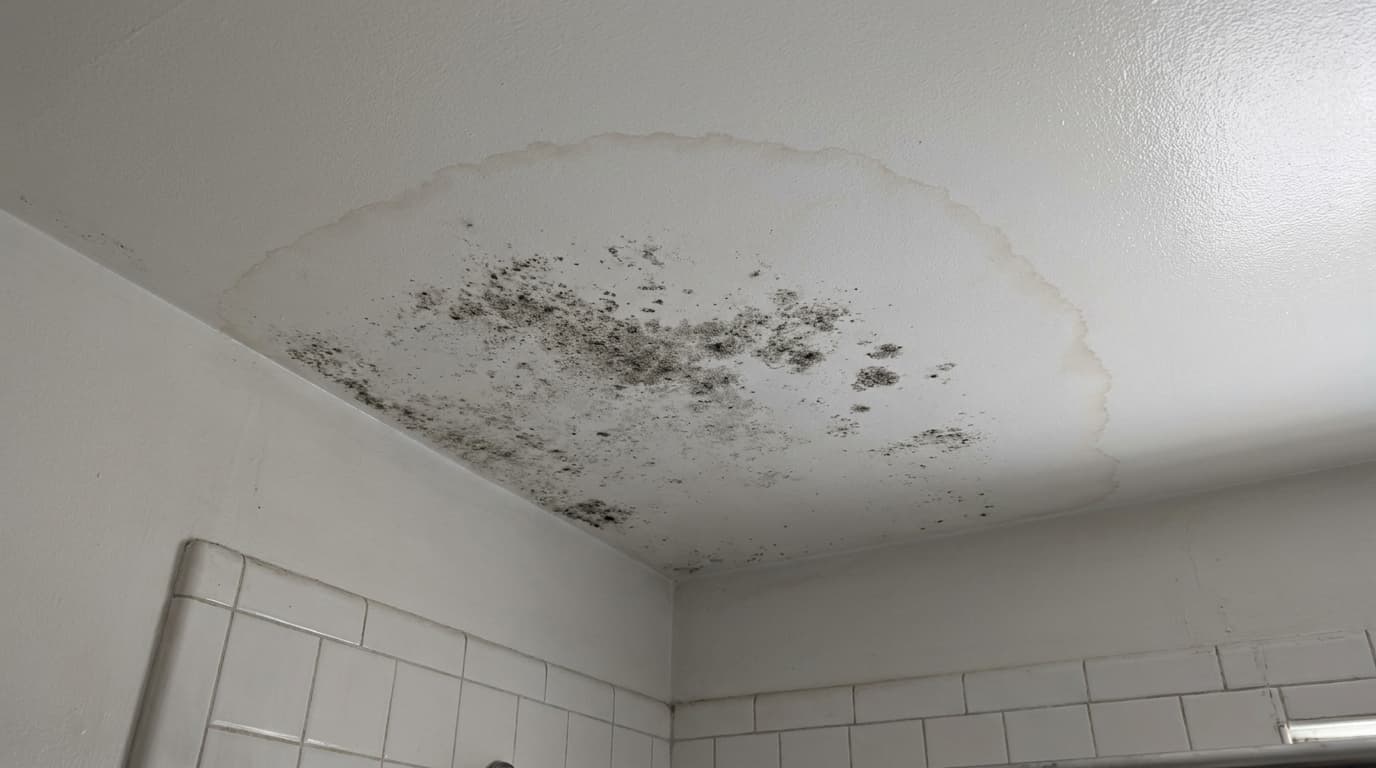
You are standing in front of a dark patch on a wall, a ceiling, or the grout behind your shower, and you want one thing: to know whether this is the bad kind. Almost everyone who calls us about growth in a Kingsport home opens the same way. Is this mildew, or is this mold?
The honest answer is that the question people ask is not the one that decides what happens next. Mildew is not a separate, safer organism sitting on one side of a line with mold on the other. What matters is how far the growth has gone into the material and where the water feeding it comes from — both answerable at home, today, with your eyes and your hands.
This is the same read we do when we are called out for mold remediation in Kingsport, in the order we do it. Most of it is not specialist knowledge.
Get Your Quote
Ready to handle this with a pro?
You're reading about How Can You Tell Mold from Mildew in a Kingsport Home. Get a fast quote for water damage restoration service in Johnson City, TN from Conrad's Water Damage and Fire Restoration.
How Can You Tell Mold from Mildew in a Kingsport Home?
Start with the part almost nobody leads with: the two categories overlap by definition. The EPA's own page on the question puts it plainly. "Mildew refers to certain kinds of mold or fungus," it says, and "the term mildew is often used generically to refer to mold growth, usually with a flat growth habit."
That undoes most of what you will find searching this: mildew is not the alternative to mold, it is a word for mold growing flat on a surface rather than into it.
You can watch the confusion play out in real time. Search the question and you will find a national cleaning brand's staff scientist describing mildew as the black growth in your shower, a waterproofing company's explainer saying the opposite — mildew is the white powdery one, black means mold — and a remediation company owner arguing the distinction was invented to make a problem sound smaller. Three sources, three incompatible answers, none of them citing anyone.
The federal agencies sidestep the argument. The CDC's guidance on mold is one sentence on this point: "If you see or smell mold, you should remove it. You do not need to know the type of mold." Elsewhere the agency is blunter, stating that "it is not necessary to determine what type of mold you may have growing in your home or other building" and that "all molds should be treated the same with respect to potential health risks and removal."
So the naming question has no practical payoff. Two others do:
Is the growth on the surface, or has it gone into the material? This decides whether cleaning it is a Saturday job or a rebuild.
Where is the water coming from? Growth is the symptom. The moisture is the cause, and removing it is the only thing that makes the problem stop.
What Do Mold and Mildew Look Like on Kingsport Surfaces?
Color is the first thing everyone reaches for and the least reliable thing available. CDC states flatly that mold "can look like spots of many different colors." The field is split: some well-ranked articles publish tidy color charts, and at least one tells readers outright that color cannot separate the two. We are on the cautious side, and so is EPA's language.
Growth habit is more useful, and it is the distinction EPA actually draws. Molds, EPA notes, "include all species of microscopic fungi that grow in the form of multicellular filaments, called hyphae" — threads that push into whatever they are growing on. That is a difference you can feel rather than see.
The surfaces this turns up on in an older Kingsport home are predictable, and EPA names two directly: "mildew often lives on shower walls, windowsills, and other places where moisture levels are high." Add the painted drywall on a closet wall backing onto an exterior wall, the ceiling above a shower with a weak fan, and the trim under a window that sweats through a humid July.
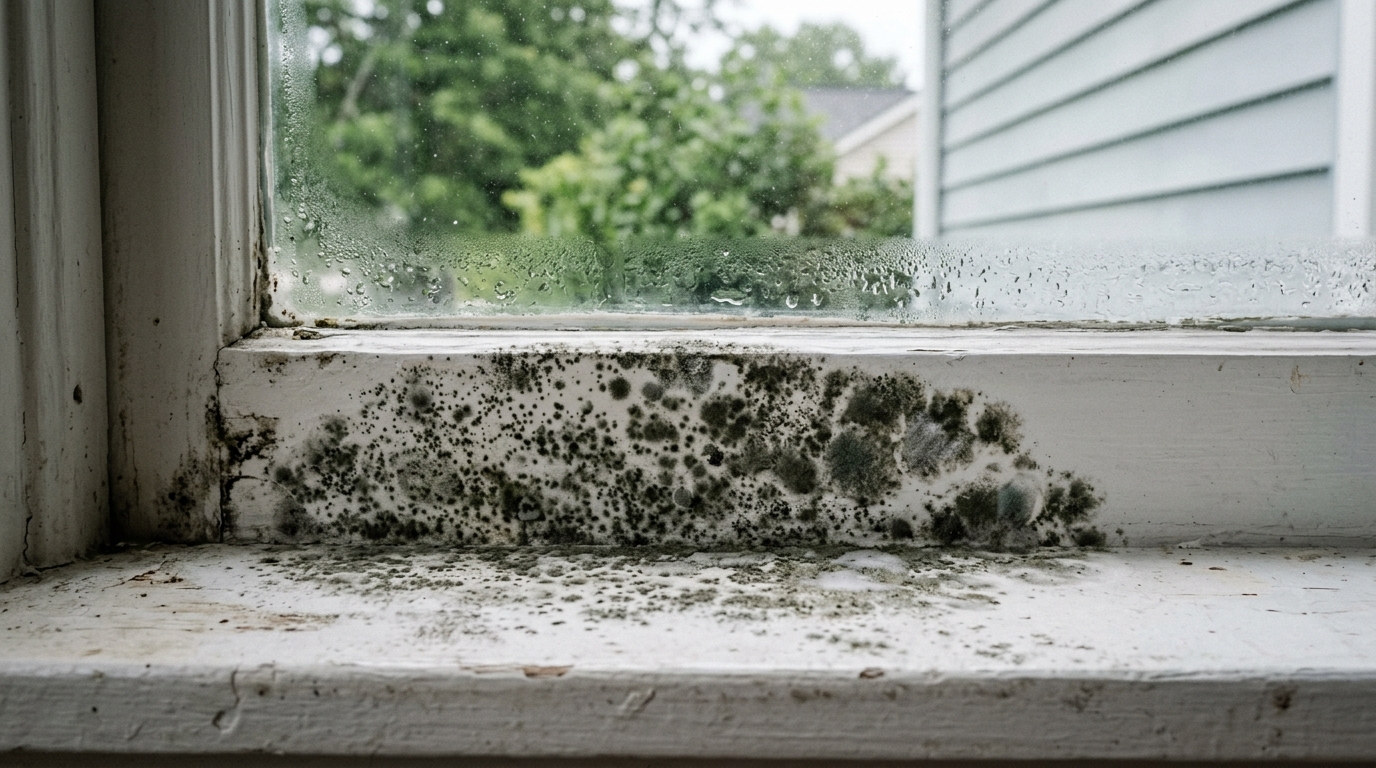
The wipe test. This is the whole diagnostic, and it costs nothing. Put on gloves, dampen a cloth, and wipe a small section.
It lifts clean. Surface growth. The material is intact, and you have a cleaning and ventilation problem.
It smears and leaves a stain that will not come up. The growth is in the finish or the material. Cleaning it is now cosmetic.
It comes back in days or weeks, same spot. You cleaned a symptom. A moisture source is still running and has not been found.
The press test. Some people press the wall beside the growth, and it is a good instinct. Drywall that gives, feels soft, or sounds dull has been wet a while. That is not a mold question anymore; it is a water question, and it usually means the water damage sitting behind the finish is the real job.
One species deserves its name checked, because people ask constantly. CDC describes Stachybotrys chartarum, the growth most people mean by "black mold," as "a greenish-black mold" that "can grow on material with a high cellulose content, such as fiberboard, gypsum board, and paper," and adds that "constant moisture is required for its growth." That last clause is the useful part. It does not appear from humidity alone. Something has been wet, continuously, for a long time.
What Does the Smell Tell You About Mold vs Mildew in Kingsport?
Smell will not tell you which organism you have. It tells you something more valuable: there is growth you have not found.
EPA notes that in unaired places, such as basements, molds "can produce a strong musty odor." CDC pairs the two senses deliberately, treating smell as evidence equal to sight — mold "can smell musty," and "if you see or smell mold, you should remove it."
That matters most when the two disagree. A room that smells musty with nothing visible is the more concerning situation, not the less. The growth is behind something: under a floor, inside a wall cavity, in insulation, in a duct. In East Tennessee that is a summer problem as much as a leak problem. Warm humid air meets a cool surface, the surface sweats, and it does that every afternoon for three months whether or not anything is leaking.
A musty smell is also not a scent problem. One renter posting for help described an apartment that had smelled musty since they moved in; the building offered an aromatherapy treatment. Masking the odor leaves the moisture exactly where it was.
Get Your Quote
Ready to handle this with a pro?
You're reading about Which Is More Dangerous for a Kingsport Home: Mold or Mildew. Get a fast quote for water damage restoration service in Johnson City, TN from Conrad's Water Damage and Fire Restoration.
Which Is More Dangerous for a Kingsport Home: Mold or Mildew?
This question has two answers, and most articles blur them together.
For the people in the house, the honest position is the federal one, and it is more measured than the internet's. CDC's language is that "exposure to damp and moldy environments may cause a variety of health effects, or none at all." For some people that means a stuffy nose, sore throat, coughing, wheezing, burning eyes or a rash. People with asthma or a mold allergy can react more severely, and CDC names immune-compromised people and people with chronic lung disease as at risk of lung infections.
On "black mold," the agency is more careful than almost anything else you will read, and it is worth quoting exactly because nobody else on this topic does. Asked whether Stachybotrys chartarum causes acute idiopathic pulmonary hemorrhage in infants, CDC's fact page answers: "To date, a possible association between acute idiopathic pulmonary hemorrhage among infants and Stachybotrys chartarum has not been proven." On testing for it: "at present, no test exists that proves an association between Stachybotrys chartarum and particular health symptoms."
We will not tell you what growth in your house is doing to your health, and we would be skeptical of anyone in our industry who does. CDC's instruction is the right one: if symptoms persist, see a physician. Either way the response is the same. Remove it, fix the water.
For the building, the answer is clearer. Flat growth on a hard, sealed surface has done no structural damage. Growth that has gone into porous material means water sat there long enough for the material to become food. EPA is direct about the consequence: "absorbent or porous materials, such as ceiling tiles and carpet, may have to be thrown away if they become moldy," because "mold can grow on or fill in the empty spaces and crevices of porous materials, so the mold may be difficult or impossible to remove completely."
Which is more dangerous? The one that got into the material, every time — not for what it is called, but for what its presence proves about how long the water has been there.
When Can You Just Wipe Mildew Away in a Kingsport Bathroom?
Often. This is the part our industry has an obvious incentive to be vague about, so here is the threshold, from EPA's homeowner cleanup guidance: "if the moldy area is less than about 10 square feet (less than roughly a 3 ft. by 3 ft. patch), in most cases, you can handle the job yourself." Three feet by three feet is a large patch. Most bathroom ceiling and grout growth is nowhere near it.
Then there is the bleach argument, the most contested point in every homeowner discussion of this. Some insist bleach only lightens mold without killing it, some recommend hydrogen peroxide instead, and one commenter just said to spray it and let it air dry. Across a couple of threads we read, four separate commenters made the "bleach does not actually kill it" case in four different ways.
They are arguing past each other, because both camps are right about different surfaces.
Hard, non-porous surfaces — tile, glass, sealed grout, glazed fixtures. CDC states mold "can be removed from hard surfaces with household products, soap and water, or a bleach solution of no more than 1 cup of household laundry bleach in 1 gallon of water." Never mix it with ammonia or other cleaners, which produces a poisonous gas. Open a window, wear gloves and eye protection.
Porous surfaces — drywall paper, ceiling tile, carpet, bare wood, insulation. Here the skeptics are right. The growth is in the crevices of the material, a surface treatment only lightens what you can see, and EPA's position is that removal may be "difficult or impossible."
The larger point is that cleaning is not the fix. It is the cleanup after the fix. If growth returns to the same spot the moisture source is still running, and in a bathroom that is almost always ventilation. One homeowner whose ceiling kept regrowing described three years and hundreds of dollars of dehumidifiers failing before the real culprit turned out to be an undersized extractor fan. The rule of thumb they landed on: roughly 1 CFM per square foot of floor, against a builder-grade unit that was only 50.
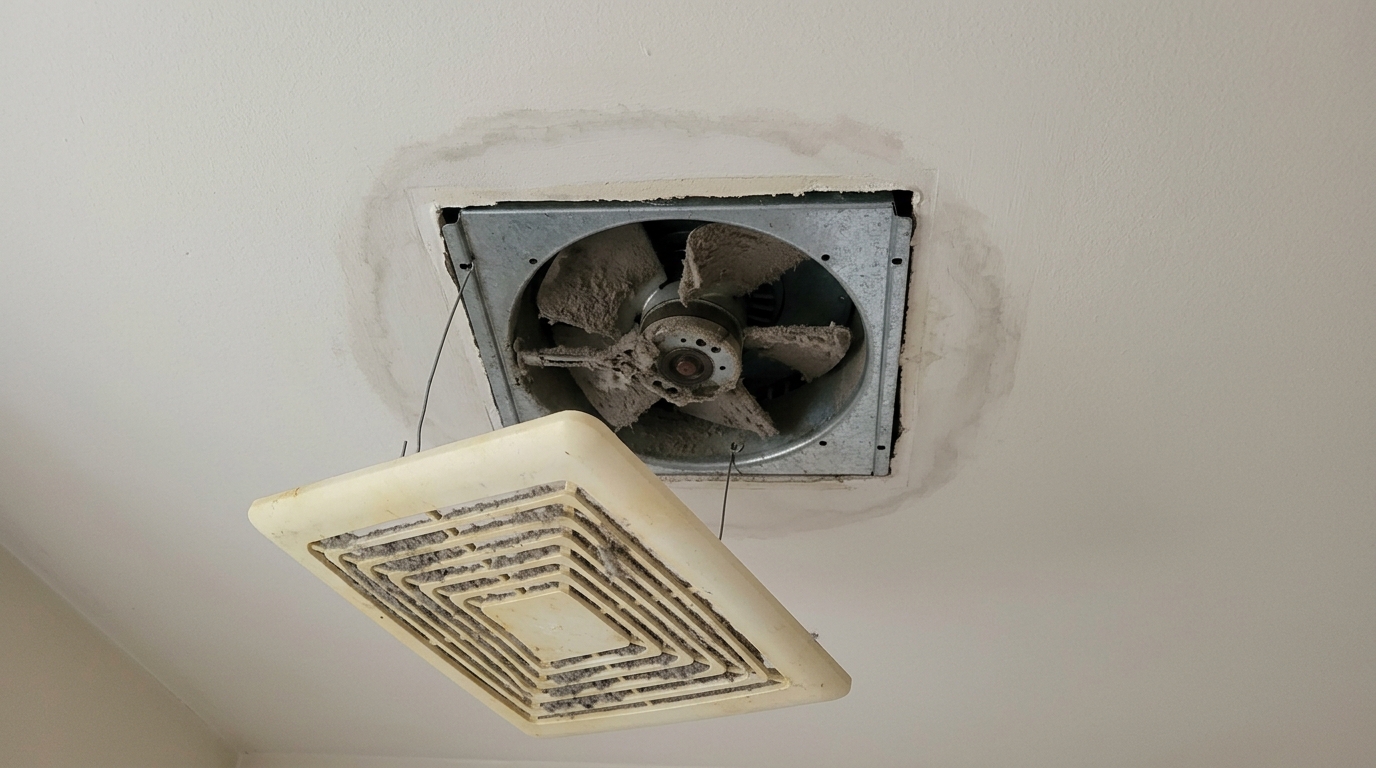
Check two things before buying anything: the fan's size, and its actual airflow. Pull the cover and look, because the blades are usually packed with dust. Then keep humidity down. CDC's target is to hold indoor humidity "no higher than 50%" all day. The University of Tennessee's housing guidance gives a wider band of 30 to 60 percent; stay in the lower half of it and you are inside CDC's number too.
One last thing, on testing. Homeowners routinely assume the responsible first move is a mold test. CDC's position is the opposite, in four words: "CDC does not recommend mold testing." Health effects vary from person to person, so sampling cannot tell you whether anyone will get sick, and "there are no set standards for what is and what is not an acceptable quantity of different kinds of mold in a home." The University of Tennessee guidance agrees, naming the Tennessee Department of Health alongside CDC and EPA. Spend the money finding the water instead.
When Does Mold in a Kingsport Home Need Professional Remediation?
EPA attaches conditions to that 10-square-foot rule that almost nobody quoting the number reproduces. They are the clearest call-someone list available:
The area is bigger than about 10 square feet, or there has been a lot of water damage.
You suspect the HVAC system is contaminated. EPA is emphatic here: "do not run the HVAC system if you know or suspect that it is contaminated with mold — it could spread mold throughout the building."
The water was sewage or otherwise contaminated. EPA says to call someone with experience cleaning buildings damaged by contaminated water. Not a judgment call.
You have health concerns. EPA's line is to consult a health professional before starting cleanup, not after.
From our side of the work, we would add three that show up constantly on the water damage calls we take around Kingsport:
It keeps coming back after you clean it. Recurrence is the moisture telling you it is still there.
You can smell it and cannot find it. Something inside a wall, floor or duct is wet.
The drywall is soft, or a stain is spreading past the growth. Water has traveled, and the growth only marks where it went.
That last one changes who you need. If a supply line, fitting or appliance hose is leaking, a plumber fixes the pipe — we do not do plumbing repair. What we handle is everything the water did on its way through the house: how far it traveled, pulling the moisture out of framing and subfloor with proper drying equipment, removing what cannot be saved. Doing our half before the pipe is fixed means doing it twice.
Under-floor spaces are their own particular problem in this part of Tennessee and deserve their own treatment rather than a paragraph here. What remediation costs is likewise a separate question, driven by how far the moisture went and how much porous material has to come out.
If you cannot tell which lane you are in, that is normal. A homeowner in one discussion we read put it better than we could: "Literally the last thing I need right now. Who do I even call?" At the identification stage the answer is usually nobody. Wipe it, watch it, see whether it comes back.
Get Your Quote
Ready to handle this with a pro?
You're reading about Key Takeaways at a Glance. Get a fast quote for water damage restoration service in Johnson City, TN from Conrad's Water Damage and Fire Restoration.
Key Takeaways at a Glance
Mildew is mold. EPA defines it as "certain kinds of mold or fungus," typically growing flat on a surface. A growth habit, not a safer species.
The name does not change the response. CDC: "you do not need to know the type of mold." See it or smell it, remove it, fix the moisture.
Color is unreliable; depth is not. Wipe a patch. Lifts clean means surface. Leaves a stain, or returns, means it is in the material or the water is still running.
Smell with nothing visible is the worse finding, not the better one.
On health, stay with the agencies. Effects range from none to significant depending on the person, and CDC states the black-mold-and-infant-hemorrhage link "has not been proven."
Under about 10 square feet on a hard surface is a homeowner job. Dilute bleach per CDC, ventilation, gloves. Porous materials are the exception.
Skip the test kit. CDC, EPA and the Tennessee Department of Health all decline to recommend mold testing.
Call someone for anything over 10 square feet, suspected HVAC contamination, contaminated water, soft drywall, or growth that keeps returning.
If you have wiped it, watched it, and it came back, or a stain is spreading past the growth and you would rather someone looked properly, we answer the phone around the clock, holidays included. We will also tell you when it is a wipe-it-down job and you do not need us.
Conrad's Restoration Team
Water, Fire & Mold Restoration Crew
The restoration crews at Conrad's Water Damage and Fire Restoration handle water, fire and mold damage across Johnson City, the Tri-Cities and the Knoxville corridor. Someone answers the phone day or night, holidays included.
Related Posts
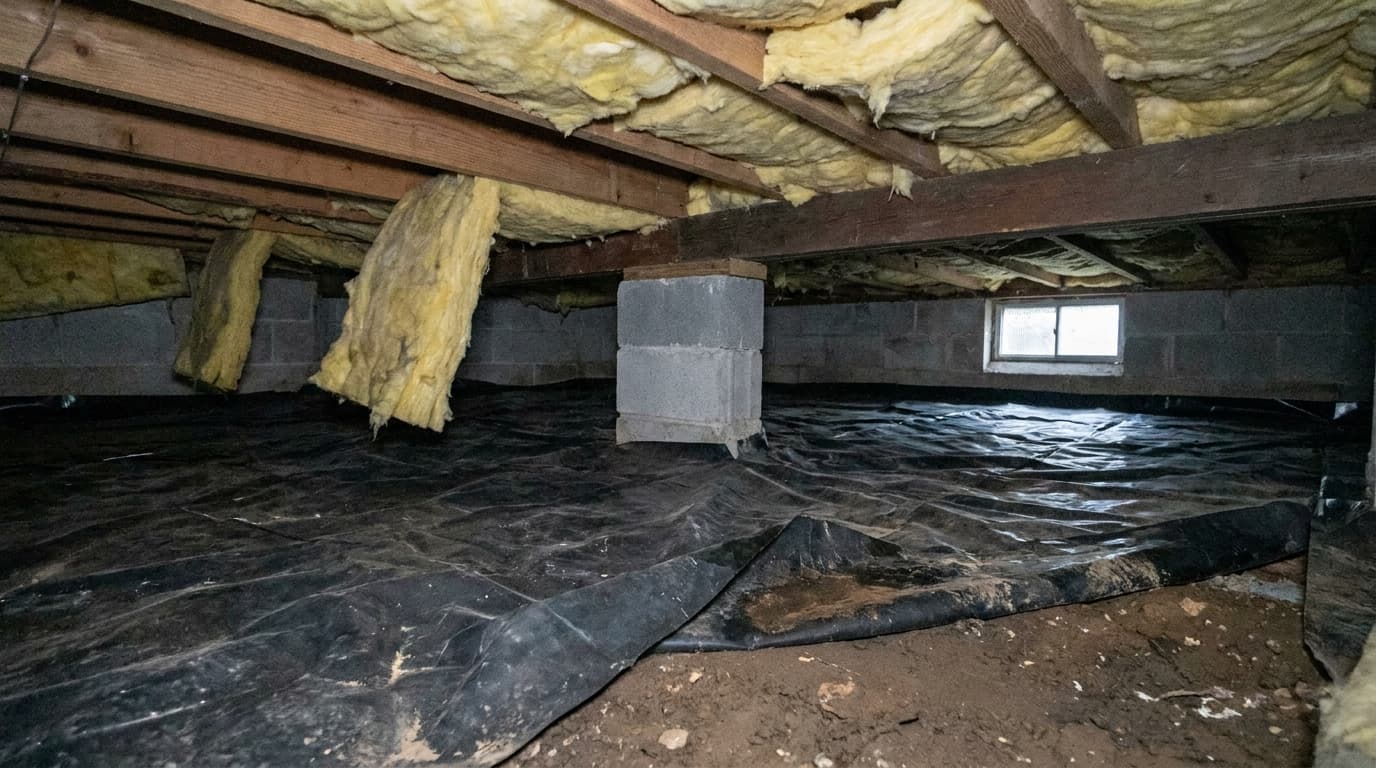
Mold in Your Crawl Space? A Johnson City Homeowner's Guide
The house smells faintly of a damp basement, or the inspection report says mold on the joists. Here is what an East Tennessee crawl space is actually doing under there, and what it takes to stop it.
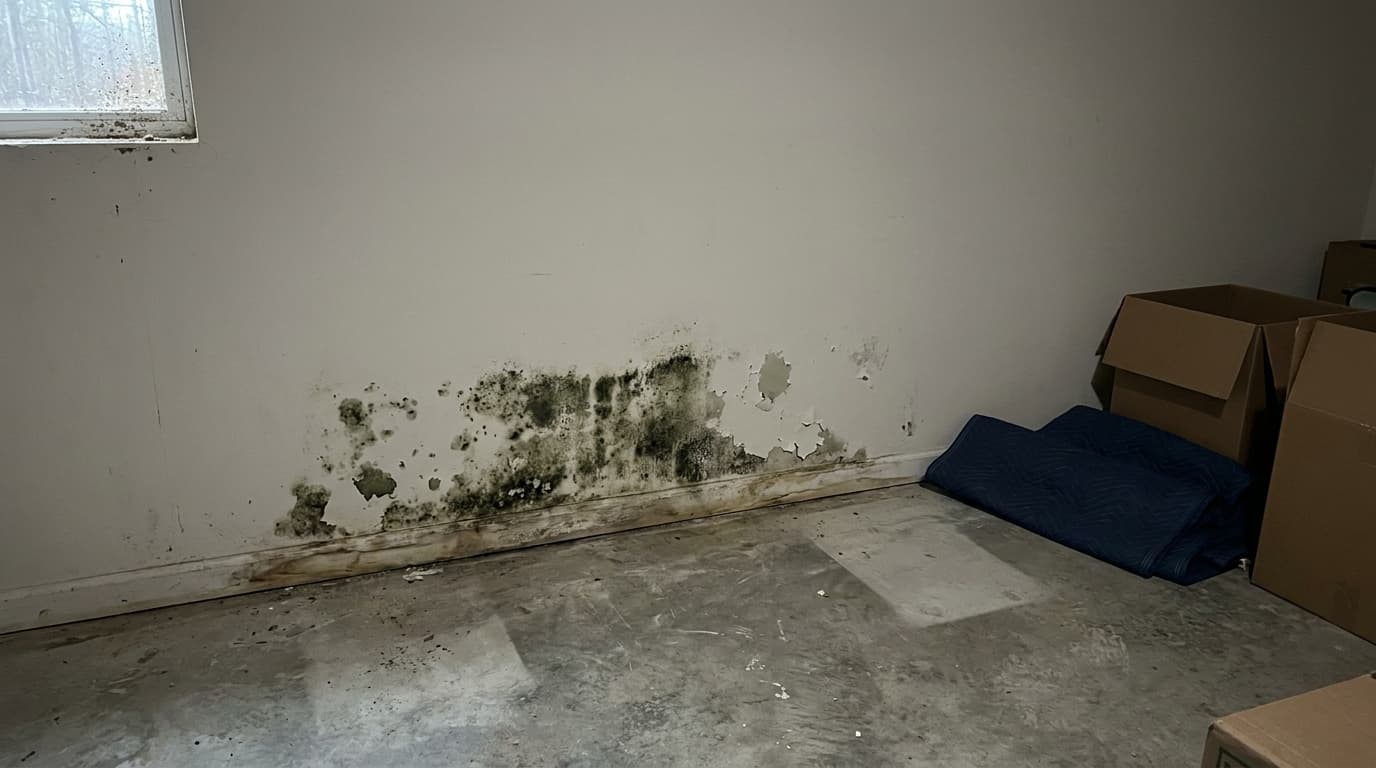
How Much Does Mold Remediation Cost in Knoxville?
Most national guides put professional mold remediation between about $1,223 and $3,757, but three of the top-ranking cost pages are quietly publishing one dataset, and the two sites offering a Knoxville figure do not even overlap. Here is what actually moves the number on a Knoxville quote: area and material, containment and testing as separate line items, the mold cap on your policy, and how to tell a high quote from a padded one.
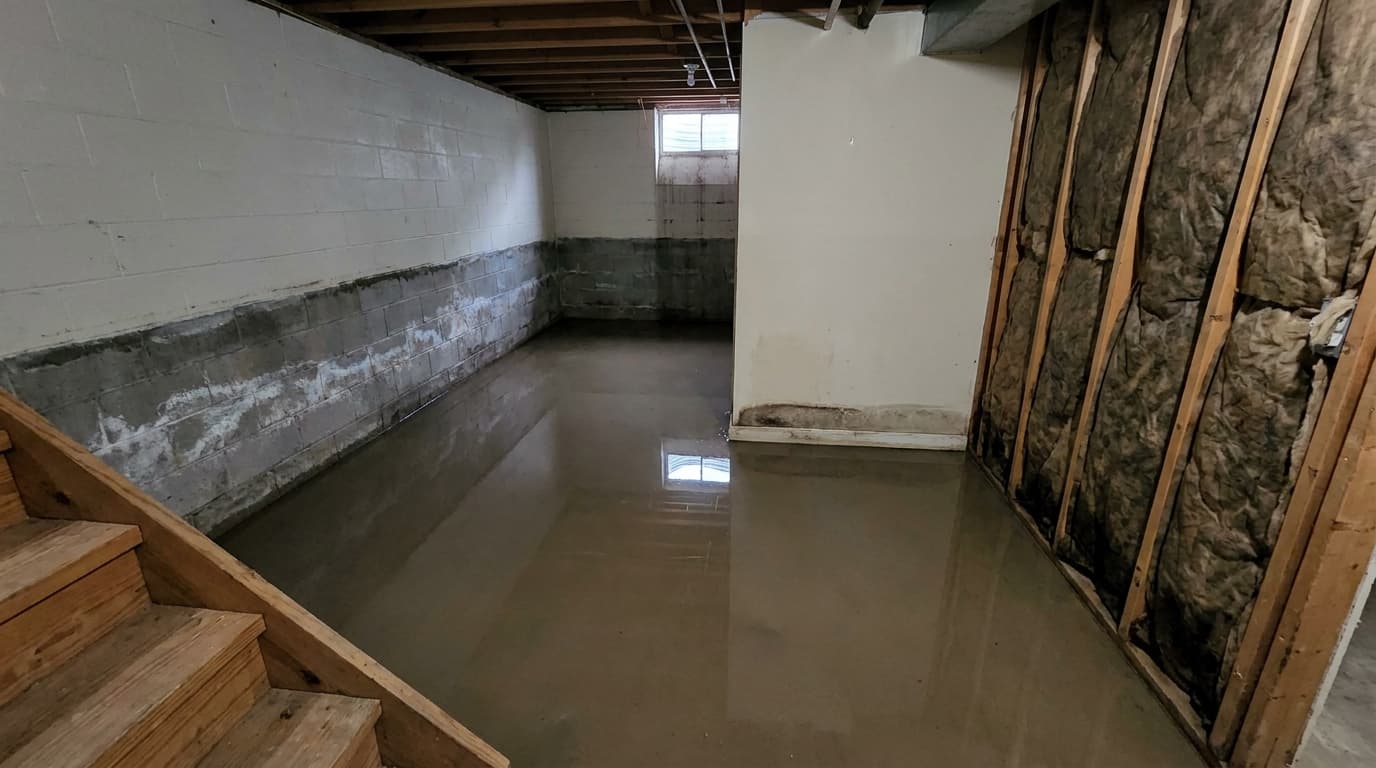
Flooded Basement in Johnson City, TN? What to Do First
Water in your Johnson City basement? Power and gas come first, then stopping the source, then the sump pump check almost nobody writes about.