Mold in Your Crawl Space? A Johnson City Homeowner's Guide
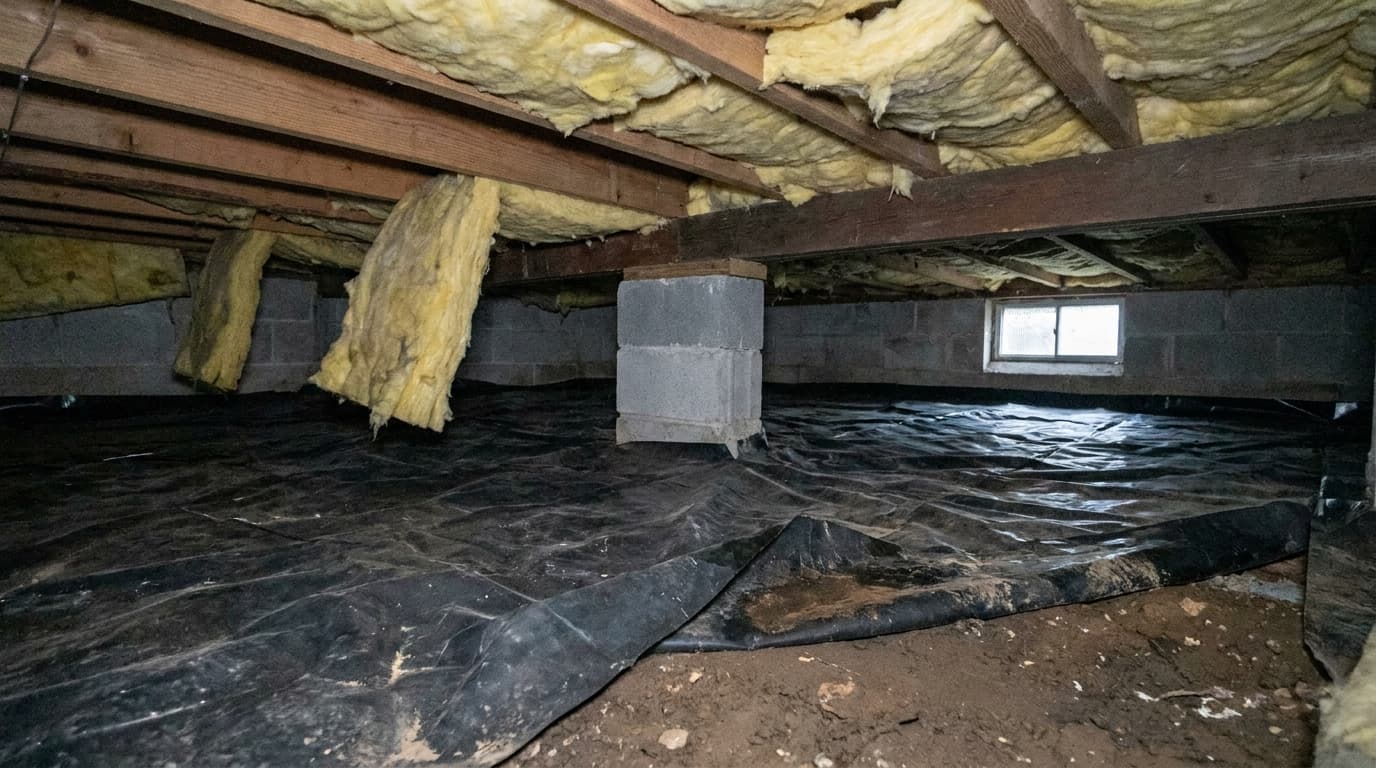
Most people find it one of two ways. Either an inspector's report comes back with the word mold beside a photo of your floor joists, or the house has smelled faintly of a damp basement since May and one afternoon you open the access door and look.
Either way you are working out how worried to be, and the internet mostly offers a shrug or a scare. Here is how we work through it when we are called out for mold remediation in Johnson City: why an East Tennessee crawl space is almost built to grow this, what the growth on your joists does and does not tell you, what the agencies will actually say about health, and where the line sits on doing it yourself.
Get Your Quote
Ready to handle this with a pro?
You're reading about What Makes a Johnson City Crawl Space So Damp and Mold-Friendly. Get a fast quote for water damage restoration service in Johnson City, TN from Conrad's Water Damage and Fire Restoration.
What Makes a Johnson City Crawl Space So Damp and Mold-Friendly?
Warm air holds more water than cool air. Outdoor air in a Tri-Cities July is warm and loaded with it, and under your house, over soil that stays cool year-round, every surface is colder than that air, so the air gives up its water onto them. It is what a glass of iced tea does on a porch in August, except in the dark, against your subfloor, all summer. The foundation vents were supposed to prevent that: in a dry climate airflow carries moisture out, and in a humid one the vents are how it gets in.
That is measured, not marketing. A Department of Energy-funded field study instrumented twelve matched houses on one southeastern cul-de-sac, vented crawl spaces against sealed. The published report puts it plainly: "the moisture conditions in the closed crawl spaces tend to track the conditions inside the houses while the wall vented crawl spaces tend to track the conditions of the outside climate." On growth the researchers hedged, and so will we: wall-vented crawl spaces "appear to be more vulnerable to fungal colonization."
For thresholds, the EPA's homeowner guide to mold and moisture says to "keep indoor humidity below 60 percent (ideally between 30 and 50 percent) relative humidity," and the CDC's target is tighter, "no higher than 50%" all day long. EPA gives the clock too: "it is important to dry water-damaged areas and items within 24-48 hours to prevent mold growth."
Neither agency publishes crawl space readings. Restoration contractors publish working figures. A Nashville restoration company has published its own for Middle Tennessee: healthy stays below 55 percent relative humidity, 55 to 60 percent starts collecting moisture on cool surfaces like ductwork and joists, above 60 percent is what they call mold-growth territory, and above 70 percent, in their words, "active fungal growth can appear on exposed wood within 24 to 48 hours under the right temperature conditions." They put their summer humidity at 60 to 75 percent — their figures for their market, not readings from under your house.
Older housing across Washington County was built vented, because that was the standard. A plumbing failure is a different animal, one where the growth is the second problem and the water that caused it is the first.
What Are the Signs of Mold in a Johnson City Crawl Space?
Your nose gets there before your eyes do. EPA treats smell as its own category of evidence: "you may suspect hidden mold if a building smells moldy, but you cannot see the source." The CDC pairs the senses in one instruction: "if you see or smell mold, you should remove it."
The seasonal pattern is the tell most people miss. One homeowner in a home improvement forum described it exactly: musty when they bought the house in August, gone through the winter, back the next spring. A smell that tracks outdoor humidity rather than rainfall points at the climate, not a leak.
A musty smell in the rooms above, strongest near floor registers or at the crawl space door. Compare the door against your living room; a dramatic difference means the source is below.
Discoloration on joists, subfloor and insulation — white, gray, green, brown or black patches, or dark staining and a heavier feel to the fiberglass batts.
More insects than usual. One mold-testing laboratory's list of the bugs drawn to crawl space mold names cockroaches, fungus gnats, booklice and crickets.
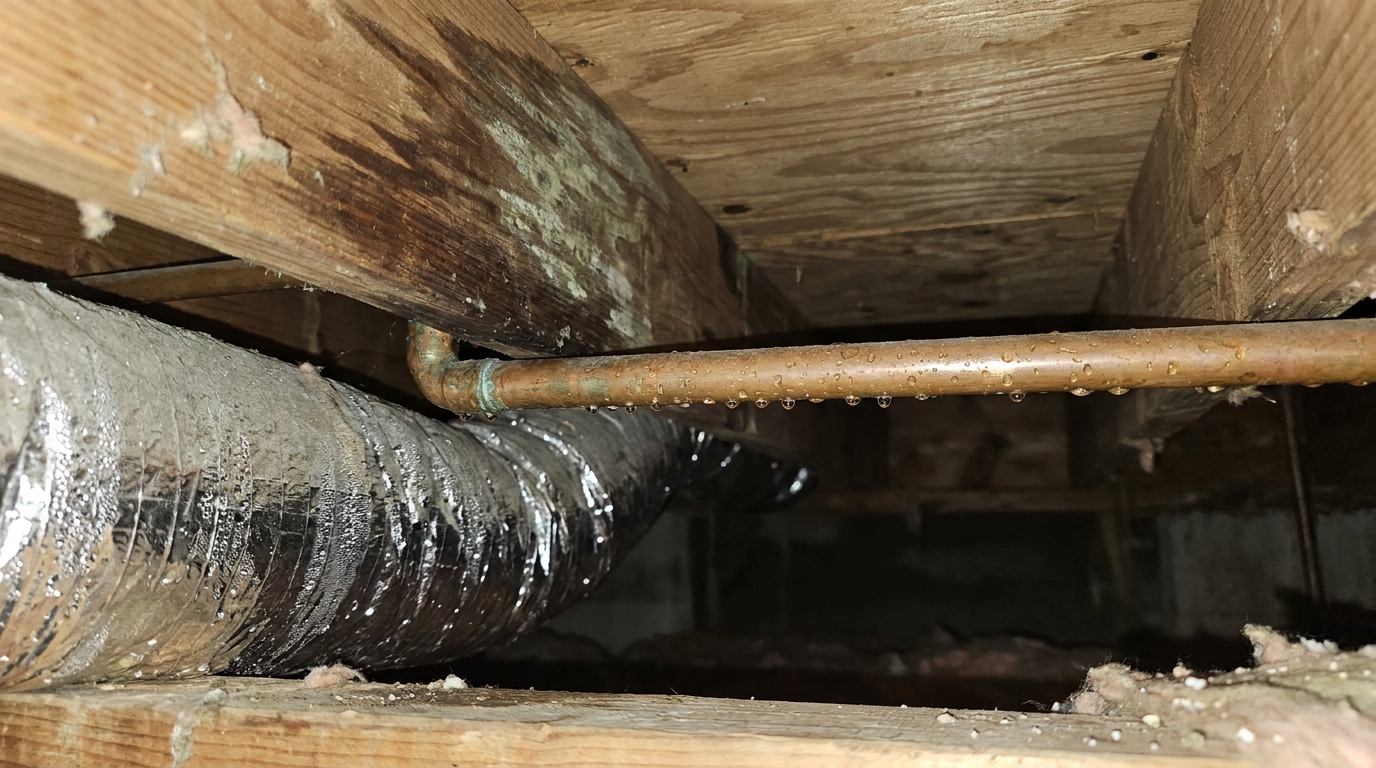
Condensation you can see — beaded water on cold lines and ductwork, rust on nail heads and hanger straps, a damp sheen on the vapor barrier.
Allergy-type symptoms that ease when you leave the house. Worth mentioning to a doctor, and not proof of anything on its own.
Soft floors, or beams that look like they are decaying. A different category, and articles on this subject routinely blur it. As one commenter put it, mold and rot are two very different things. Surface growth has not weakened a joist; wood that gives under a screwdriver has been wet a very long time.
Most of this you can gather without going under: open the door, smell, look, and check whether the pattern moves with the season. It is the read we start with on the water damage calls we take around Johnson City.
Is White or Black Growth on Johnson City Crawl Space Joists Dangerous?
Color is the first thing everyone asks about and close to the least informative thing available. The CDC states it flatly: mold "can look like spots of many different colors," and then draws the practical conclusion in one line: "you do not need to know the type of mold."
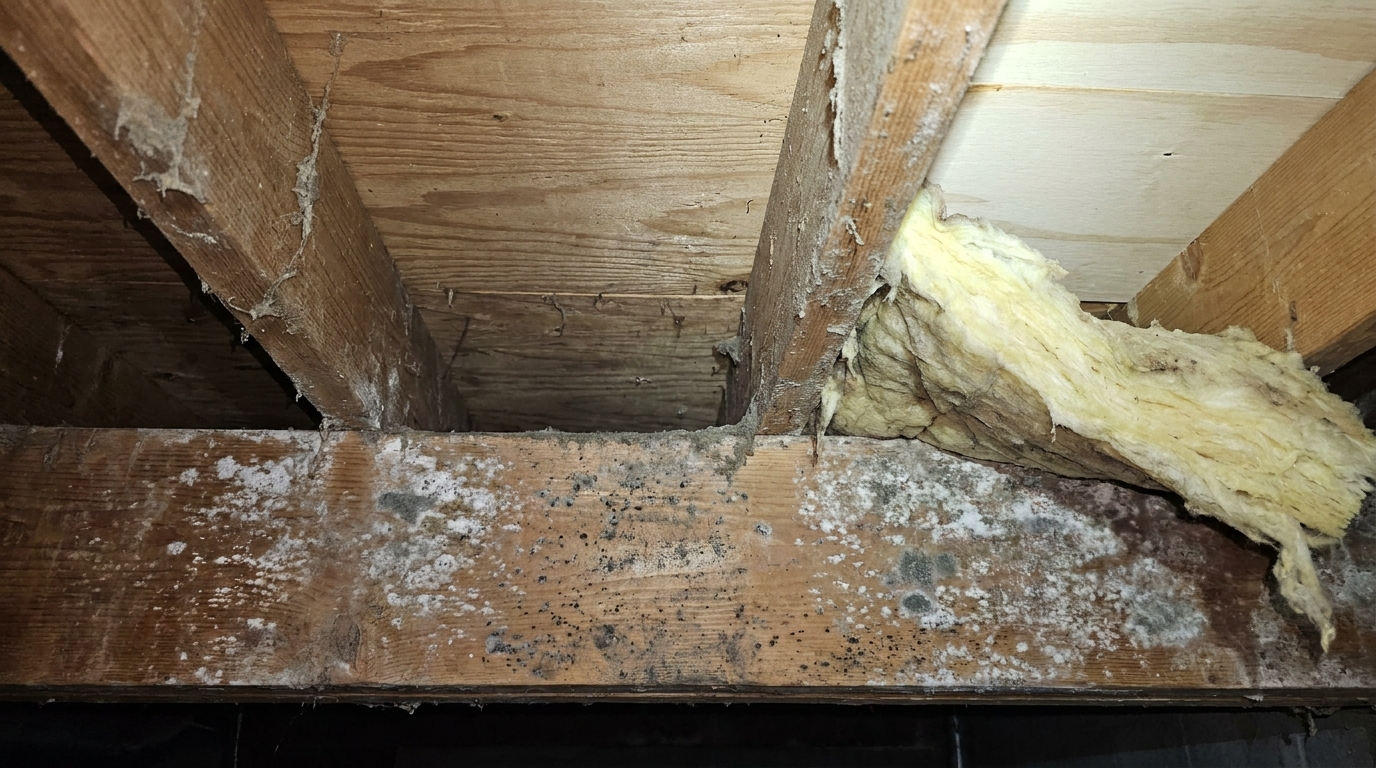
The photograph shows why: white fuzzy patches and dark speckled colonies, inches apart on one board, from one moisture problem. Two other questions do earn their keep.
Is it living on the wood or eating the wood? The crawl space trade separates surface mold from wood-decay fungus. Mold grows on the face of the lumber and its consequences are mostly about the air; decay fungus consumes the wood, and its consequences are joists and subfloor. From four feet away both look like discoloration, so the test is mechanical rather than visual: press or probe.
And where does the growth stop? Pull a batt of insulation back and look at the line. A Washington-state mold inspection firm publishes this as a diagnostic: growth on the exposed faces of the joists ending in a clean line exactly where the insulation covered them points to humidity rather than a one-time soaking, while growth hidden behind the insulation more often dates to the original construction. That firm adds its own caveat, worth carrying over honestly. Their read applies to climates with cool winters and dry summers; in hot, humid climates, they write, crawl spaces can grow mold from condensation on surfaces cooled by air conditioning. That is our climate.
Get Your Quote
Ready to handle this with a pro?
You're reading about What Are the Health Risks of Crawl Space Mold in a Johnson City Home. Get a fast quote for water damage restoration service in Johnson City, TN from Conrad's Water Damage and Fire Restoration.
What Are the Health Risks of Crawl Space Mold in a Johnson City Home?
We will sound less certain here than most of the industry, on purpose.
The CDC's guidance on mold and health opens with a sentence almost nobody quotes: "exposure to damp and moldy environments may cause a variety of health effects, or none at all." From there: "for some people, mold can cause a stuffy nose, sore throat, coughing or wheezing, burning eyes, or skin rash. People with asthma or who are allergic to mold may have severe reactions. Immune-compromised people and people with chronic lung disease may get infections in their lungs from mold." EPA draws the boundary from the other side: "symptoms other than the allergic and irritant types are not commonly reported as a result of inhaling mold," and "research on mold and health effects is ongoing."
Every qualifier there is doing work. May. For some people. In people with asthma. Not commonly reported. Anyone who strips those out is telling you something the source did not say.
The crawl space adds a wrinkle a bathroom does not: you can be exposed without going down there. Air moves up into the rooms above through gaps around plumbing penetrations and ductwork, which is why the smell reaches your living room. EPA is direct about the ductwork version, telling homeowners not to run the system if they know or suspect it is contaminated, because "it could spread mold throughout the building."
What we will not do is tell you what any of this is doing to your health. EPA says to consult a health professional before starting cleanup if you have health concerns, and the CDC's guidance goes only as far as naming who is most at risk: people with asthma or a mold allergy may have severe reactions, and people with weakened immune systems or chronic lung disease can develop lung infections. Be wary of anyone in this trade who offers you a verdict instead.
When Is DIY Mold Removal Safe in a Johnson City Crawl Space?
Often enough that we will give you the threshold first. EPA: "if the moldy area is less than about 10 square feet (less than roughly a 3 ft. by 3 ft. patch), in most cases, you can handle the job yourself."
The conditions EPA attaches are the part almost nobody reproduces. Call someone instead if there has been a lot of water damage or the growth covers more than about 10 square feet; if you suspect the heating and cooling system is contaminated, since EPA warns not to run it because "it could spread mold throughout the building"; if the water was sewage or otherwise contaminated; or if you have health concerns, in which case EPA says to consult a health professional first.
EPA's page was written for a house, though, not the two feet of space under one.
Respiratory protection is not optional, and fit is the point. EPA's list is short: "gloves, goggles, N-95 respirator." It adds that "in order to be effective, the respirator or mask must fit properly," and specifies long gloves and goggles without ventilation holes.
Pulling insulation down is the worst part of the job. A homeowner who did a friend's crawl space called it work that "takes a lot of effort and sends the mold spores everywhere even if you have an exhaust fan going," and the rule they set themselves afterward was never to take the mask off.
The confined space is a real variable. Three people in one thread raised it unprompted, asking about headroom and claustrophobia. One answered the poster's phrase "worked up the courage" directly: if tight spaces are hard for you this will be very hard, and if they are not, it will still be hard. Bring more light than you think you need.
Do not dig out the soil. Disturbing moldy ground is the most effective way to put spores in the air and move the problem somewhere else.
Two EPA instructions are worth pinning up first. "Do not paint or caulk moldy surfaces. Clean up the mold and dry the surfaces before painting. Paint applied over moldy surfaces is likely to peel" — and sealing it under primer is the most common wrong plan. Then: "dead mold may still cause allergic reactions in some people, so it is not enough to simply kill the mold, it must also be removed," and absorbent materials like soaked insulation "may have to be thrown away." Outranking all of it: "you must have completely fixed the water or moisture problem before the cleanup or remediation can be considered finished."
How Do You Know Whether to Remediate or Encapsulate Crawl Space Mold in Johnson City?
These get sold as competing options. They are not. Remediation deals with what has already grown: taking out affected material, physically removing the growth from the wood rather than only killing it, and drying the framing. Encapsulation changes the conditions so it does not come back — sealed foundation vents, a heavy sealed liner across the soil and up the walls, usually a dehumidifier.
The order matters more than the choice. Homeowners keep asking whether a dehumidifier makes cleanup unnecessary, and one posted two contractor quotes that said opposite things on that point. The case for cleaning first is practical: before you seal, everything is visible and reachable; afterward it is behind plastic.
People are genuinely split on encapsulation. Across the discussions we read, four argued it is oversold and four argued it is necessary. The skeptics have a point, made best by a homeowner in the American south who noticed that the enthusiastic articles on this subject are usually written by companies selling the service. So does the reply from a commenter who said they had worked in building envelope design for close to twenty years: it is not a scam, but a loose-laid partial vapor barrier with untaped seams and dirt showing through is, in their words, "essentially useless."
Here is our position, and where we stop. We do mold remediation and the drying that has to follow it. We do not sell encapsulation and we do not do plumbing repairs, so if the source is a failing supply line, a plumber fixes the pipe and we handle what the water did on the way through.
What it costs is a separate subject with its own drivers: how much affected material comes out, how hard the space is to work in, whether the moisture source has actually been corrected, and whether a sealing job follows. A quote that never mentions the third one is quoting you half a job.
Get Your Quote
Ready to handle this with a pro?
You're reading about The Quick Recap. Get a fast quote for water damage restoration service in Johnson City, TN from Conrad's Water Damage and Fire Restoration.
The Quick Recap
The climate is the cause, not bad luck. A DOE field study in the Southeast found vented crawl spaces "appear to be more vulnerable to fungal colonization" than sealed ones.
Know whose numbers are whose. EPA: below 60 percent indoor humidity, ideally 30 to 50. CDC: no higher than 50. The 55, 60 and 70 percent crawl space thresholds are a Nashville contractor's published figures, not readings from your house.
Smell is the first instrument. EPA treats a musty smell with no visible source as grounds to suspect hidden mold, and one that returns each spring points at humidity, not a leak.
Color does not grade the danger. CDC: "you do not need to know the type of mold." White and black growth can sit inches apart on the same board.
Mold and decay are different findings. Surface growth is an air question; wood that gives under a probe is a structural one.
On health, stay inside what the agencies say. Exposure "may cause a variety of health effects, or none at all," with severe reactions possible in people with asthma or a mold allergy. Health concerns go to a physician, not to a contractor.
Under about 10 square feet is usually a homeowner job per EPA, with four exceptions: heavy water damage, a suspected contaminated heating and cooling system, sewage or contaminated water, or health concerns. Add a fitted N-95, gloves, goggles and light.
Do not paint over it, and do not stop at killing it. Per EPA, paint over moldy surfaces is likely to peel, and dead mold still has to be removed.
Clean first, seal second, and neither is finished until the moisture problem is fixed.
If you cannot tell which of these you are looking at, that is a normal place to be. We will tell you when it is a small job you can handle in an afternoon with a good mask, and when it is not. We answer the phone around the clock.
Conrad's Restoration Team
Water, Fire & Mold Restoration Crew
The restoration crews at Conrad's Water Damage and Fire Restoration handle water, fire and mold damage across Johnson City, the Tri-Cities and the Knoxville corridor. Someone answers the phone day or night, holidays included.
Related Posts
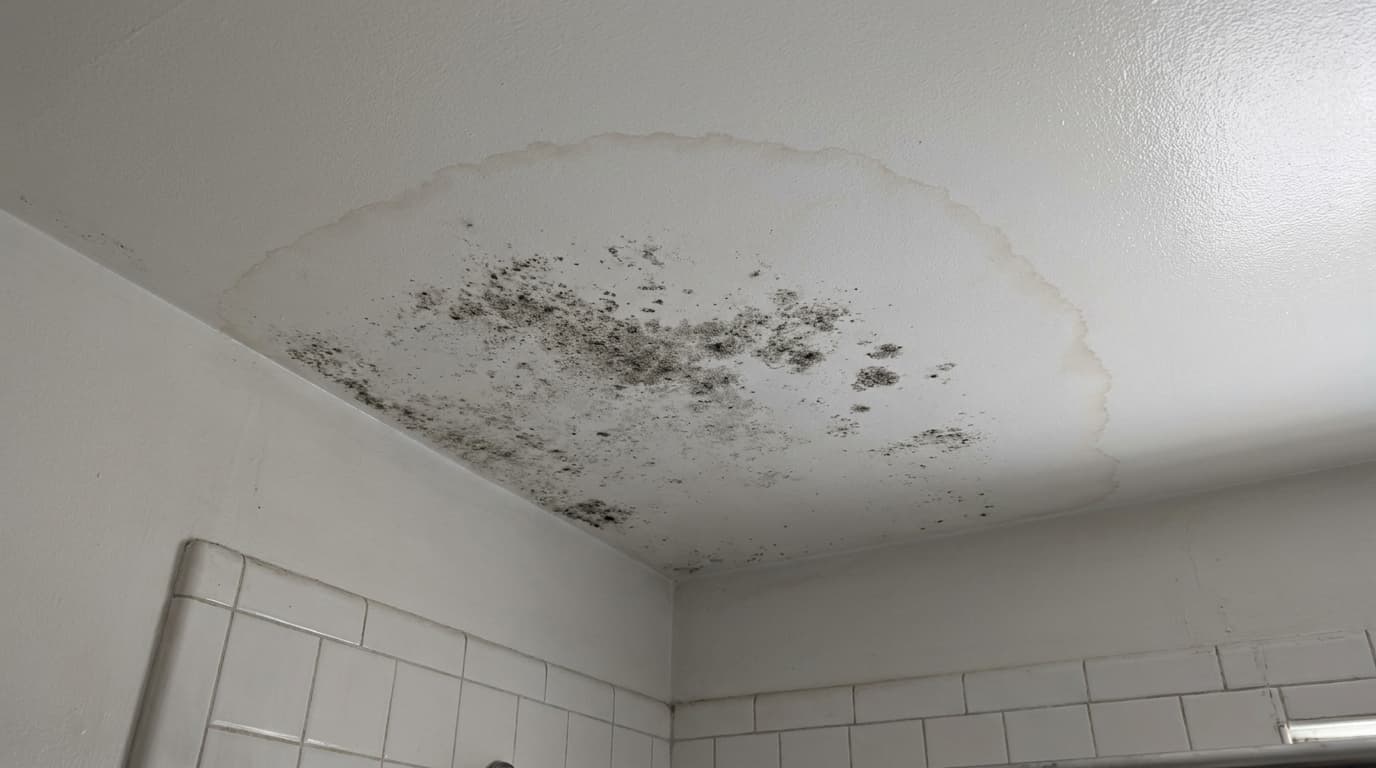
Mold vs Mildew in Kingsport Homes: How to Tell the Difference
Mildew is not the safer alternative to mold. The EPA defines it as certain kinds of mold, growing flat on a surface rather than into it, which means the question worth asking is not which one you have. It is how deep the growth has gone and where the water feeding it is coming from. Here is how to read both in a Kingsport home, and when a wipe-down is genuinely enough.
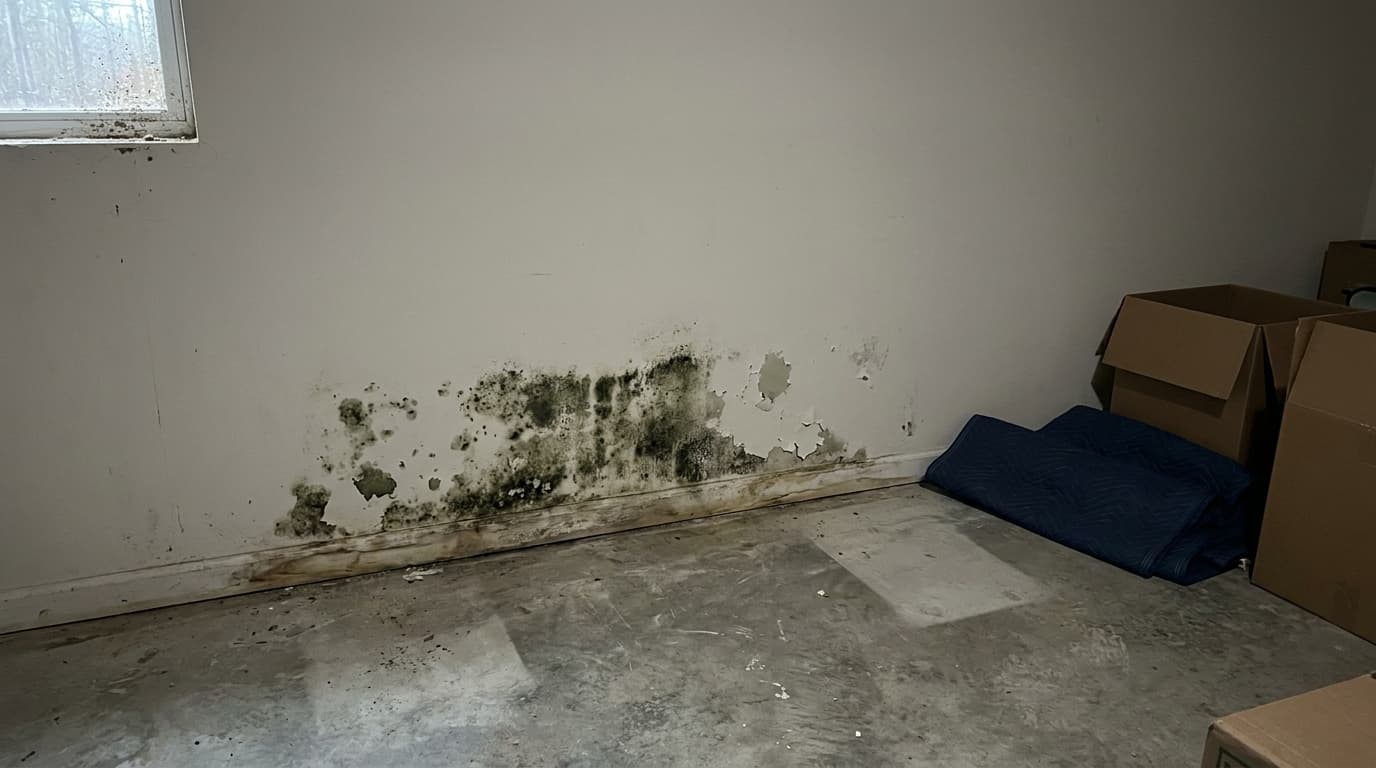
How Much Does Mold Remediation Cost in Knoxville?
Most national guides put professional mold remediation between about $1,223 and $3,757, but three of the top-ranking cost pages are quietly publishing one dataset, and the two sites offering a Knoxville figure do not even overlap. Here is what actually moves the number on a Knoxville quote: area and material, containment and testing as separate line items, the mold cap on your policy, and how to tell a high quote from a padded one.
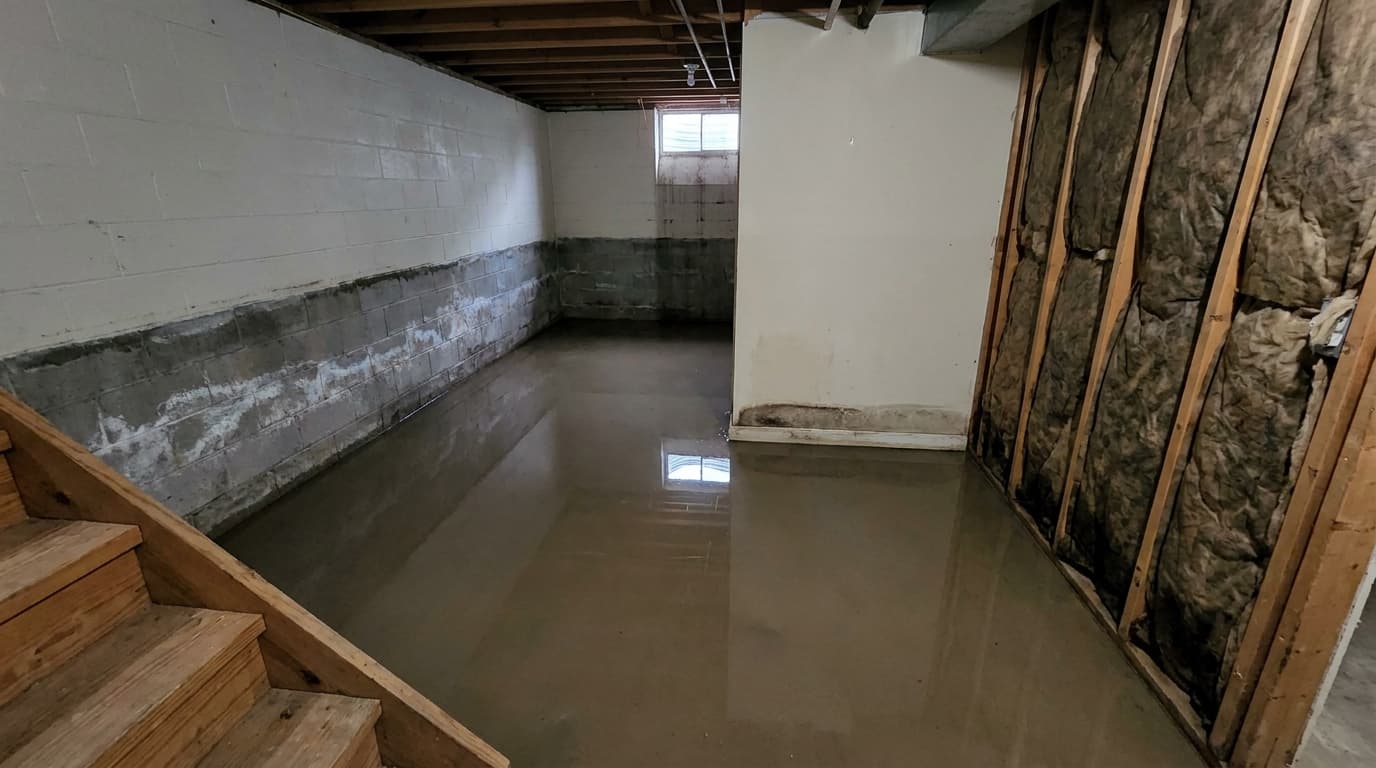
Flooded Basement in Johnson City, TN? What to Do First
Water in your Johnson City basement? Power and gas come first, then stopping the source, then the sump pump check almost nobody writes about.